
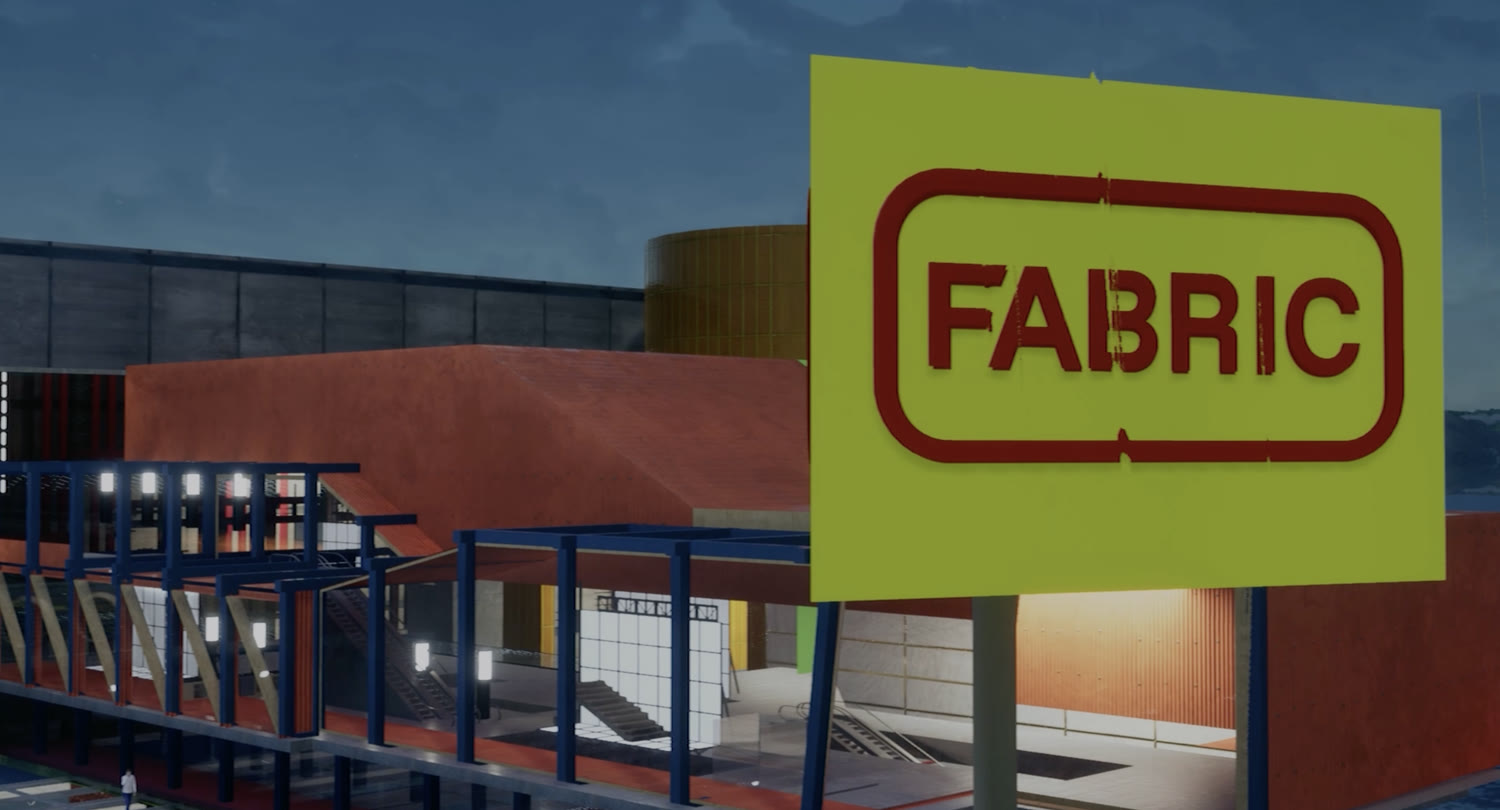
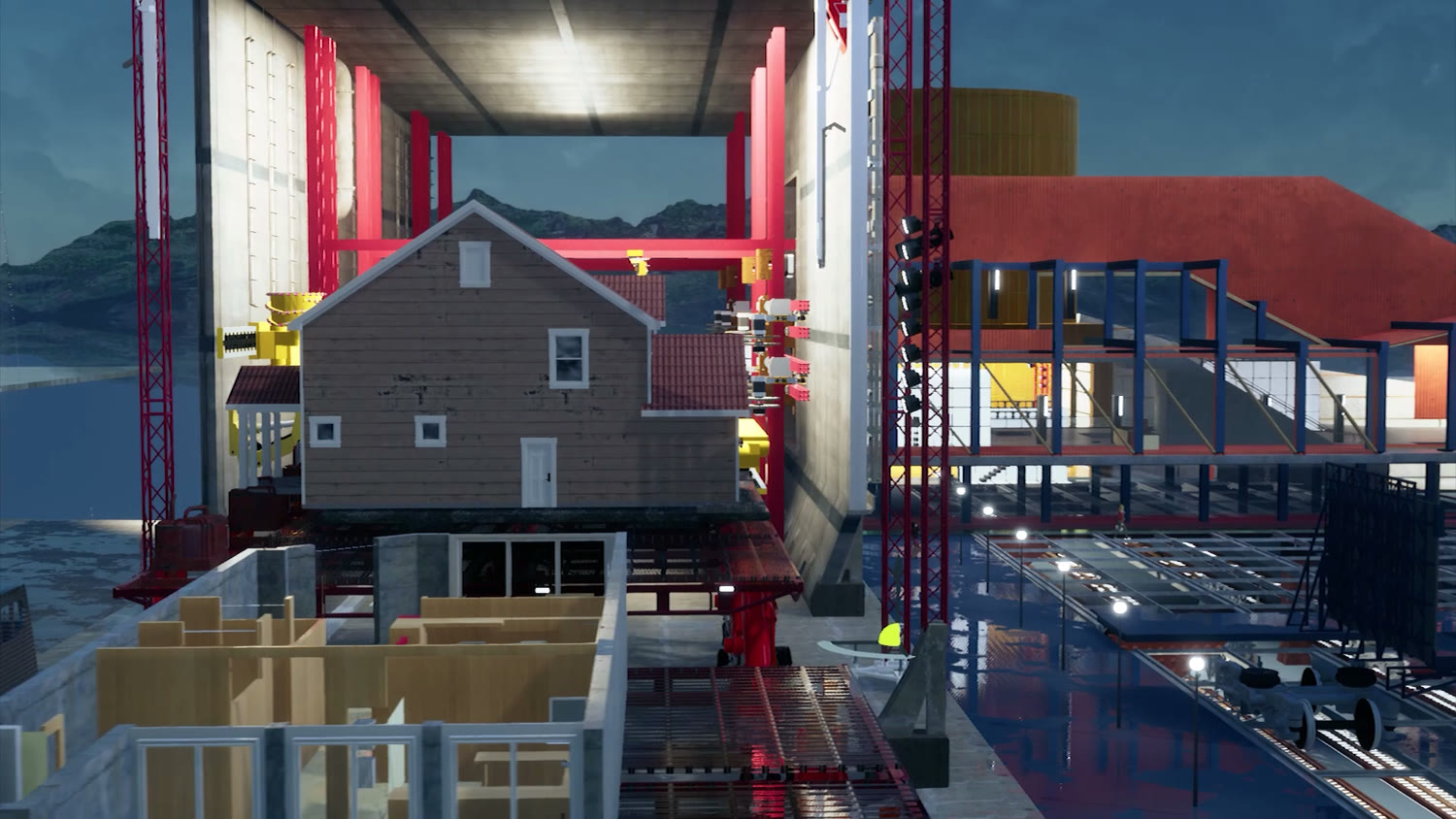
The project imagines FABRIC, a major retail complex where visitors can watch the automated processes of scanning, dismantling and processing buildings — perhaps saying goodbye to their old building while browsing new building parts and eating lunch at the canteen.
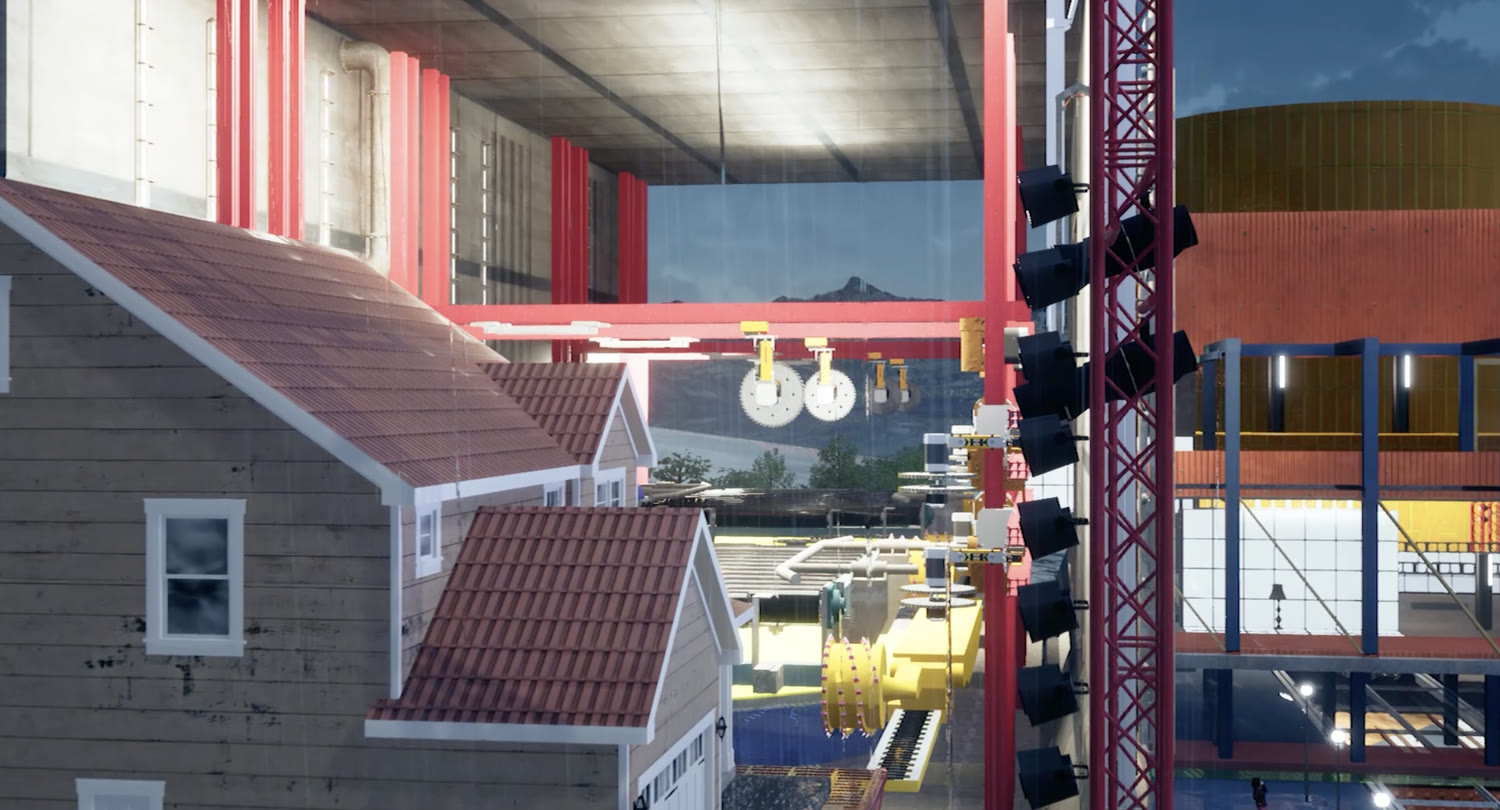
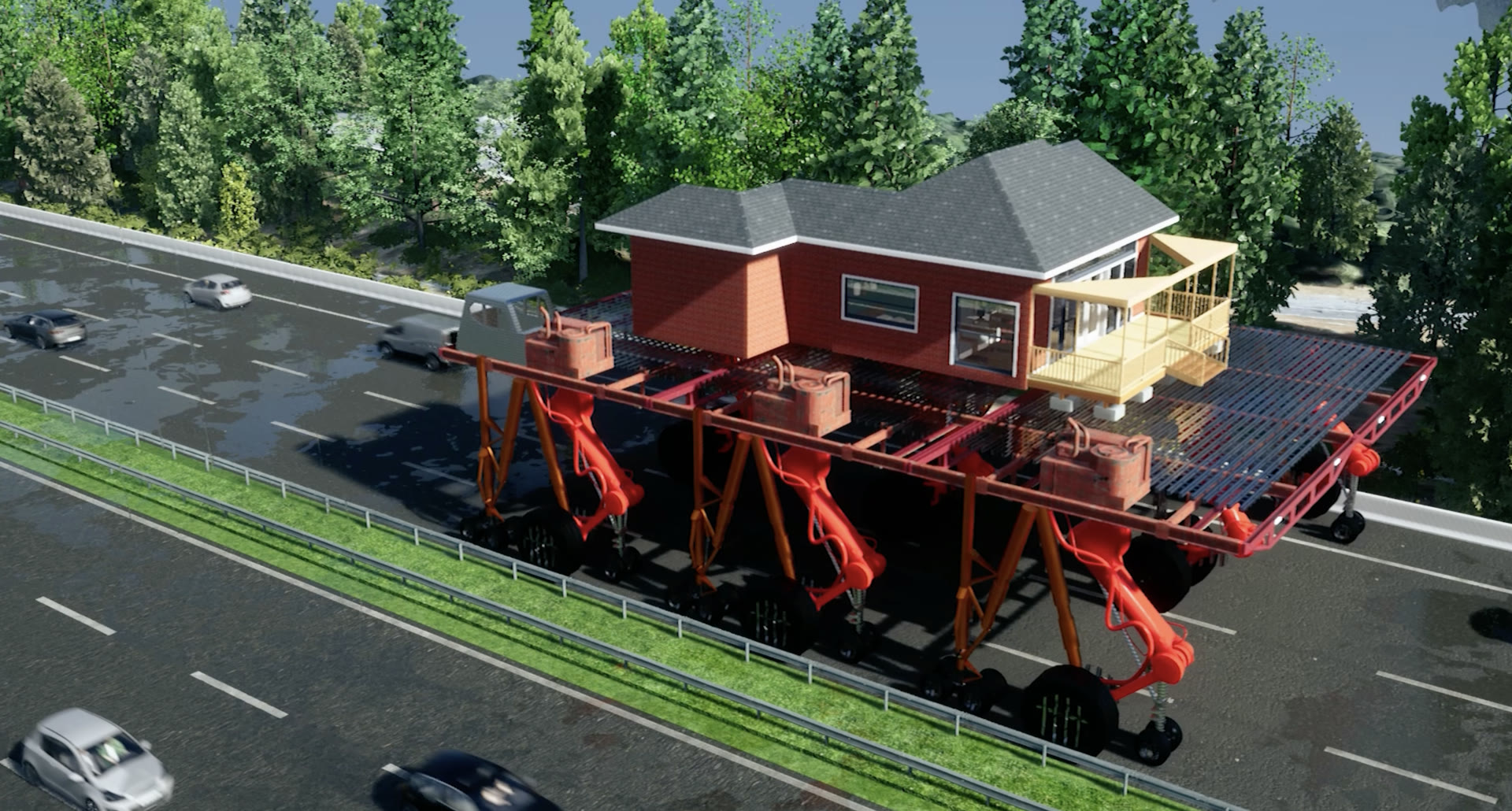
To achieve this, the project features elevated autonomous building transport vehicles that can relocate full buildings along motorways without interrupting traffic. Each building is 3D scanned on arrival, ready to be processed and cut into recyclable or salvageable components. Necessary repairs can be made on-site with 3D printing technology.
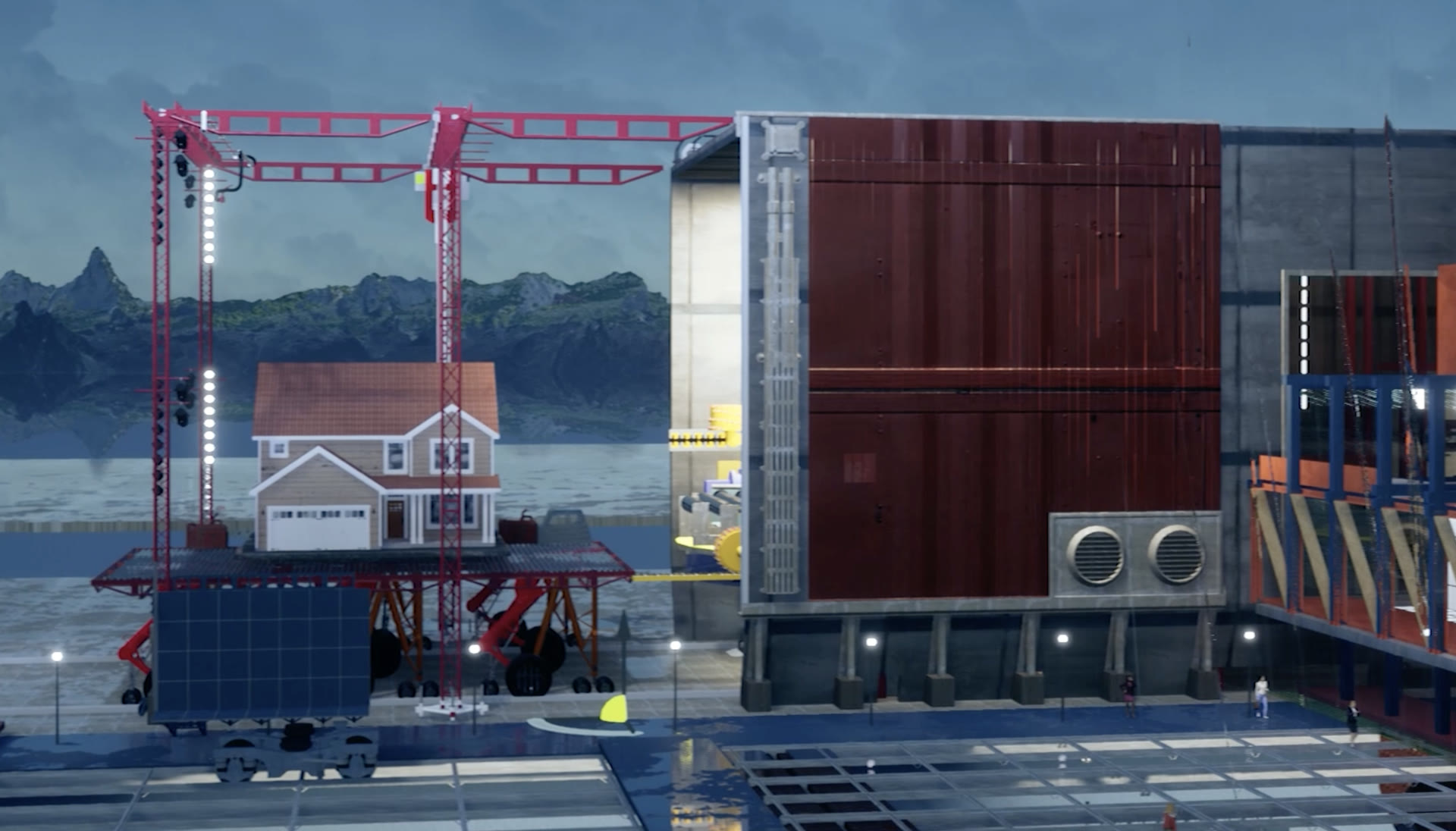
Reusable materials or components are sorted, filtered and stored on site with a system of automated robots on tracks. What can't be re-used is filtered into high-value graded aggregates. The project proposes a new super-container size standard, to integrate building component recycling into global logistics and its networks.
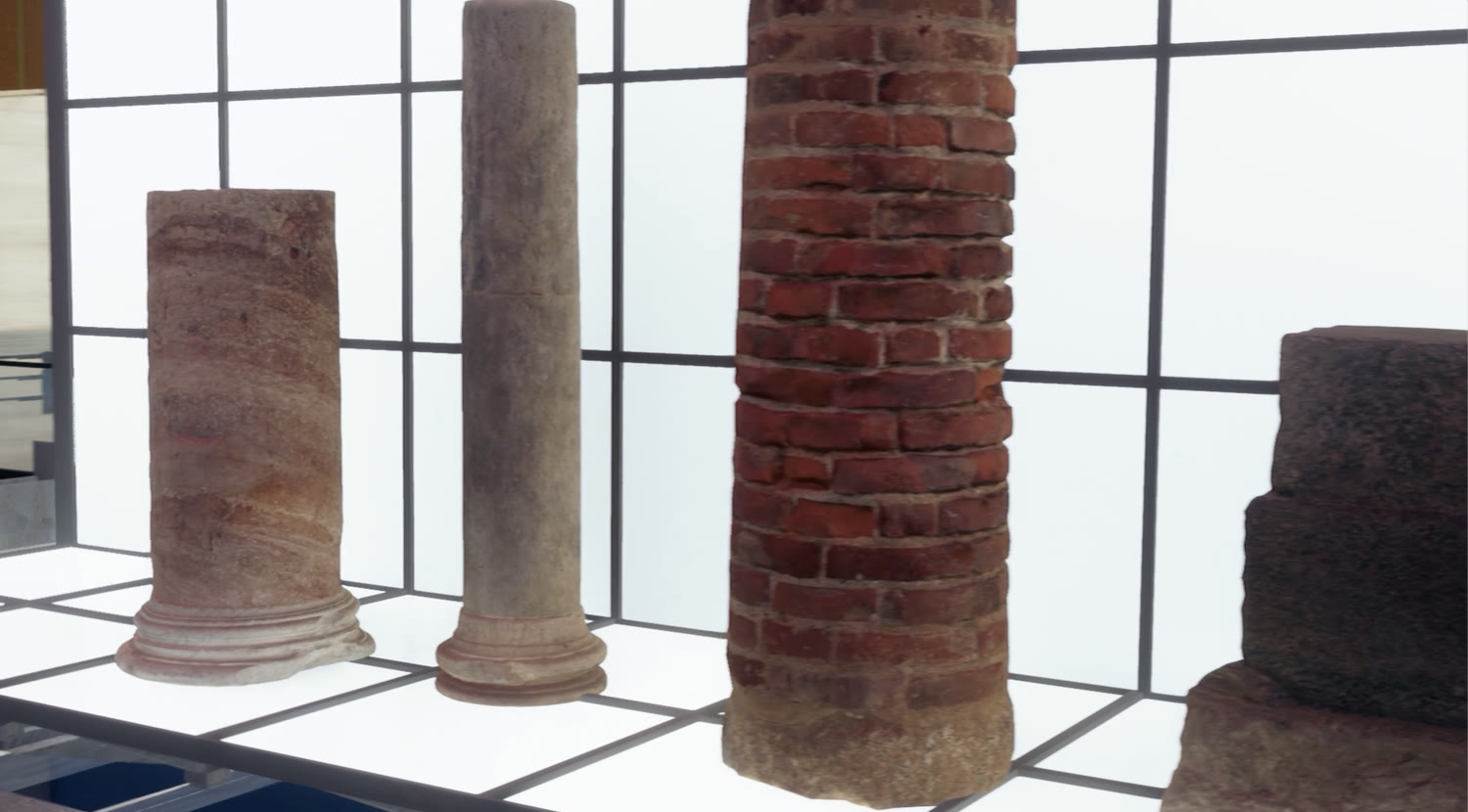
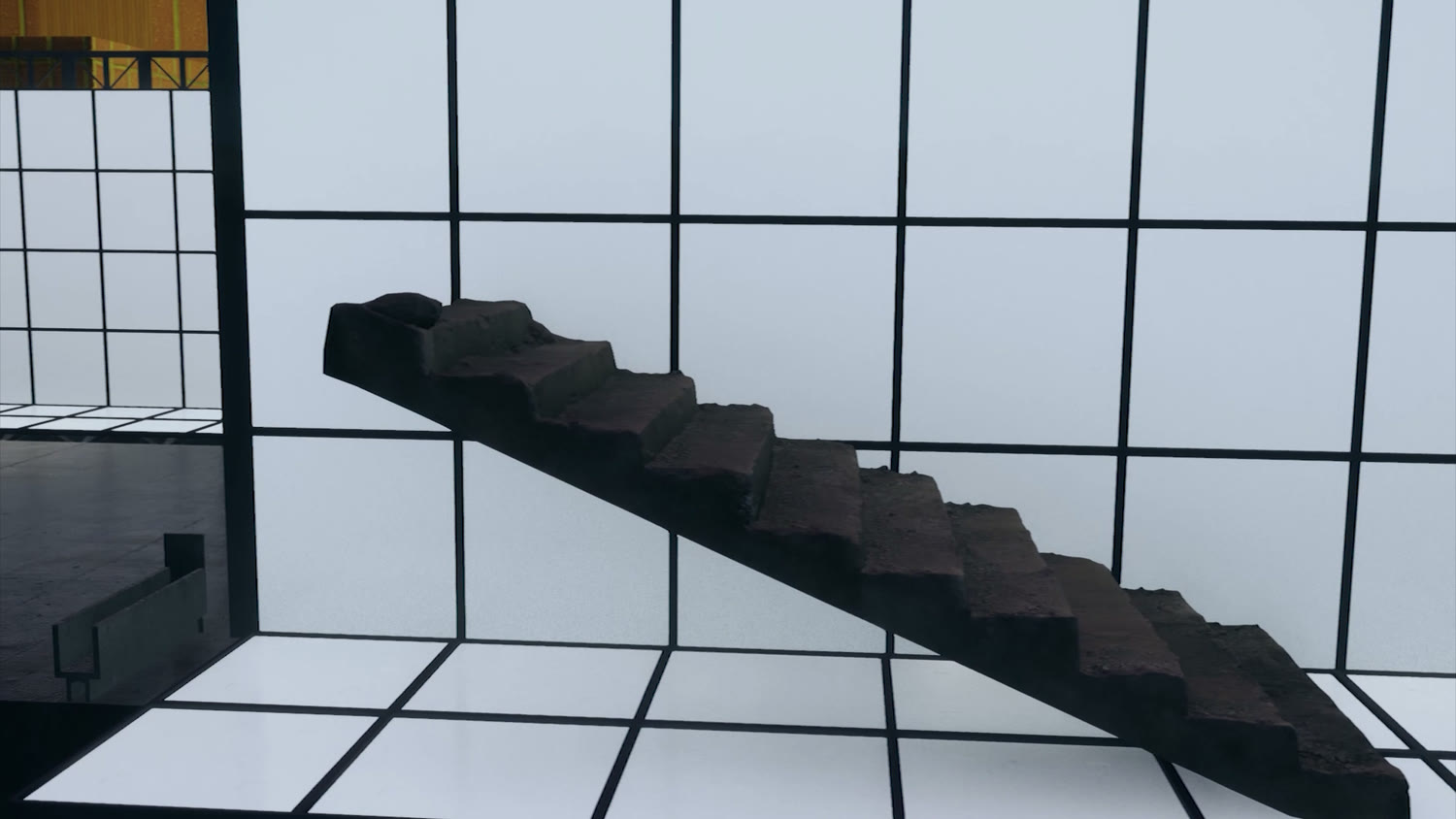
Although the project is speculative in spirit, dealing with the issue of building waste is one of the most knotty environmental issues we face.
For many sectors, the steps we might take toward a society-wide deep decarbonisation are becoming more obvious. However, when it comes to rethinking how we use (and re-use) building materials to reduce their colossal carbon footprint, the construction industry is lagging far, far behind.
The construction sector uses more resources and generates more waste than any other UK sector. A report cited by the UK government's waste-prevention programme estimates that up to 15% of materials may be wasted during construction. Although around 90% of construction waste is recorded as recycled, much of it is downcycled as backfill or aggregate rather than retained at its original value. (UK Government, Waste Prevention Programme for England)
FABRIC is inspired in part by the industrial processes that make that possible, so that we might ask how we could close the loop for building materials in a similar way. Might it be possible to scale up some existing infrastructures to make reused and recycled building components a reality?
What would the future look like if we could be more confident that building materials were part of a safe, circular economy — and how would this change how we think about designing new buildings? What would it look like if building design decisions were made on the basis of which recycled materials were seasonally or locally available?